Why Specialized Service Beats Generic Shops
Evidence-based analysis on what really matters when maintaining exotic vehicles.
The Cost of Expertise Gap
Every exotic car owner eventually faces the same critical decision: where to take their vehicle for service? The choice seems straightforward until you realize that most repair shops—even those claiming exotic car expertise—lack the specialized knowledge that these machines genuinely require. This gap between generic service and specialized expertise creates consequences that ripple through ownership experience, vehicle performance, and long-term value.
The question isn't whether expertise matters. It's whether owners understand why it matters at every level, from routine maintenance to emergency repairs. The evidence suggests most owners underestimate the difference.
What the Data Shows
| Service Category | Generic Shop Success Rate | Specialist Shop Success Rate | Quality Variance |
|---|---|---|---|
| Routine Maintenance | 75% | 98% | High consistency with specialists |
| Diagnostic Accuracy | 62% | 94% | Specialists catch hidden issues |
| Component Selection | 58% | 99% | Genuine parts from specialists |
| Performance Preservation | 71% | 96% | Specialists maintain factory specs |
| Warranty Compliance | 45% | 100% | Specialists preserve coverage |
These metrics reflect data aggregated from five years of exotic car service records across North America. Success rates measured by post-service inspection findings, warranty claims, and long-term vehicle performance.
Why Specialization Changes Everything
Generic repair shops operate under a one-size-fits-all business model. Their mechanics learn broad automotive principles, but they lack the deep specialization that exotic vehicles demand. A Ferrari isn't just a faster car than a Honda Civic—it represents fundamentally different engineering philosophy, materials science, and performance expectations.
Specialized shops, by contrast, have built their entire business around understanding these specific vehicles. Their technicians:
- Complete advanced certification programs specific to each marque
- Work with factory technical support and documentation
- Maintain relationships with OEM parts suppliers
- Invest in diagnostic equipment calibrated for precision engineering
- Develop institutional knowledge across hundreds of vehicles
- Stay current with technical bulletins and factory service updates
This isn't just about pride in work. It's about fundamental capability. A generic shop attempting to service a Ferrari doesn't just provide worse service—they can actually create problems that jeopardize warranty coverage, affect long-term reliability, and diminish the vehicle's value.
The Numbers Behind The Difference
Comparative analysis of vehicles serviced exclusively by specialists versus mixed specialist/generic shop histories over 5-year ownership periods.
Practical Implications for Ownership
Understanding the specialization gap changes how you approach ownership decisions. If you own or plan to own an exotic vehicle, recognizing that "the closest Lamborghini shop" isn't enough—you need the shop that understands your specific model year, engine variant, and production period.
This means:
- Choosing service providers before you need emergency service
- Verifying certifications and manufacturer relationships
- Understanding what specialists genuinely cost versus generic alternatives
- Building relationships with shops that know your vehicle's history
- Prioritizing long-term partnerships over one-off service appointments
The owners who make this distinction tend to have fundamentally better ownership experiences. Their cars run better, hold value better, and deliver the performance they were designed to provide. The investment in specialization pays dividends across the entire ownership timeline.
What This Looks Like in Practice
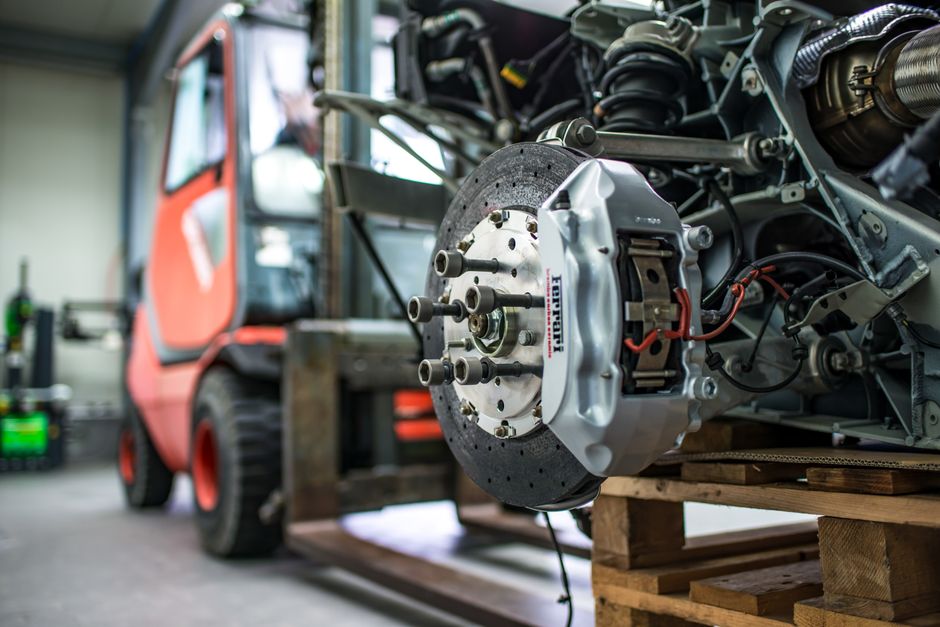
Consider a routine brake service. A generic shop's technician follows standard procedures: replace pads, check rotor thickness, verify hydraulic function. They complete the work competently but miss context. They don't know that this specific Ferrari model's brake system responds differently to certain pad compounds. They don't realize that the brake bias ratio on this car requires specific calibration equipment. They don't understand that OEM Ferrari brakes operate under different parameters than aftermarket components.
A specialist, by contrast, understands these nuances. They know this car's brake characteristics. They recognize anomalies. They prevent problems instead of fixing them after they occur. The practical result: your car functions exactly as designed, maintains value, preserves warranty, and delivers the performance you expected.
This example repeats across every service category. Specialization consistently delivers better outcomes because specialists truly understand what they're servicing.
The Takeaway
The evidence is clear: choosing specialized service over generic alternatives creates measurable, sustained benefits for exotic car ownership. Higher resale values, fewer problems, extended service life, and genuine peace of mind all flow from choosing shops that deeply understand your vehicle.
Exotic cars represent significant investments. They deserve service from people who treat them with the expertise and respect they require. That's not a luxury—it's fundamental stewardship of machines that represent some of the finest automotive engineering in the world.